AI in Journalism: How AI is Transforming the Newsroom (2026)
Walk into any modern newsroom today, and you might not see robots typing away at desks—but make no mistake, artificial intelligence is already there. It’s quietly humming in the background, analyzing data, suggesting headlines, detecting breaking news trends, and even drafting articles in seconds. Journalism, a profession once fueled purely by human curiosity and instinct, is now deeply intertwined with algorithms and machine learning systems.
So, what does that really mean for reporters, editors, and readers like you and me?
Artificial intelligence has become more than just a buzzword. It’s a tool reshaping how stories are discovered, produced, distributed, and consumed. From automating earnings reports to identifying misinformation before it spreads like wildfire, AI is fundamentally altering the news ecosystem. And it’s happening fast—faster than many newsrooms anticipated.
Think about it this way: journalism used to be like sailing a ship using the stars for navigation. Today, AI acts like GPS. It doesn’t replace the captain, but it provides powerful data, real-time updates, and predictive insights that make the journey more efficient and informed.
But here’s the big question: Is AI enhancing journalism—or quietly redefining it?
The answer isn’t black and white. AI brings speed, scale, and precision. Yet it also raises concerns about bias, job security, and authenticity. As technology evolves, journalists must adapt or risk being left behind. The transformation isn’t coming—it’s already here.
In this article, we’ll explore exactly how AI is changing journalism, what it means for the industry’s future, and why the human element still matters more than ever.
The Evolution of Journalism in the Digital Age

To understand how AI is changing journalism, we first need to look at how journalism has already evolved. The industry has never been static. It’s constantly reinventing itself—first with the printing press, then radio, television, the internet, and now artificial intelligence.
Remember when newspapers were the primary source of news? Morning papers were sacred. Then came 24-hour news channels, transforming reporting into a real-time experience. The internet accelerated everything. Suddenly, news wasn’t daily—it was instant. Social media took it a step further, making everyone with a smartphone a potential reporter.
Each technological leap reshaped how stories were told and consumed. But AI feels different. Why? Because it doesn’t just change distribution—it changes production itself.
In the digital age, newsrooms are flooded with information. Data pours in from social media, government databases, financial markets, satellites, and user-generated content. Human journalists alone can’t process it all. This is where AI steps in, acting like a supercharged assistant that never sleeps.
Algorithms now help identify trending topics before they explode. AI systems scan millions of documents in minutes. Tools analyze audience behavior to determine which headlines will perform best. Journalism is no longer just about storytelling—it’s about data interpretation and audience analytics.
Yet, with all these advancements, one truth remains: journalism’s core mission hasn’t changed. It still aims to inform, hold power accountable, and tell meaningful stories. The tools may evolve, but the purpose stays rooted in truth and public service.
AI is simply the next chapter in journalism’s ongoing evolution. The question is, how will journalists shape it?
Understanding Artificial Intelligence in Media
Before diving deeper, let’s simplify things. Artificial intelligence sounds complex, almost intimidating. But at its core, AI is about teaching machines to mimic human intelligence—learning patterns, making decisions, and improving over time.
In media, AI isn’t some futuristic robot reporter wearing a press badge. It’s software. It’s algorithms. It’s systems trained to process massive amounts of information faster than any human could.
What Is AI in Simple Terms?
Imagine teaching a computer to recognize cats by showing it thousands of cat pictures. Eventually, it learns patterns—fur, whiskers, ears. That’s machine learning, a branch of AI. Now apply that same concept to journalism. Instead of cats, the AI learns to recognize financial trends, breaking news signals, or even fake information.
AI in journalism relies on technologies like:
- Machine Learning (ML)
- Natural Language Processing (NLP)
- Deep Learning
- Predictive Analytics
- Computer Vision
These systems analyze text, audio, video, and data. They don’t “think” like humans, but they detect patterns incredibly well.
Key AI Technologies Used in Newsrooms
Let’s break down how these technologies function inside a newsroom:
- Natural Language Processing (NLP): Enables AI to understand and generate human language. This powers automated article writing.
- Machine Learning Algorithms: Analyze reader preferences and suggest personalized content.
- Computer Vision: Helps verify images and detect manipulated visuals.
- Speech Recognition: Converts interviews into transcripts instantly.
It’s like having a team of invisible assistants working behind the scenes.
But here’s the catch—AI doesn’t understand context the way humans do. It doesn’t grasp sarcasm, cultural nuance, or emotional depth unless specifically trained to detect patterns. That’s where journalists still hold the upper hand.
AI is powerful, yes. But it’s a tool—not a storyteller with lived experience. At least, not yet.
AI-Powered News Writing and Automation

Now we reach one of the most talked-about changes: AI writing articles. Yes, machines are already generating news stories. But before you imagine robots replacing entire newsrooms, let’s unpack how this actually works.
AI-powered news writing focuses primarily on structured, data-heavy stories. Think financial earnings reports, sports scores, weather updates, and stock market summaries. These articles follow predictable formats and rely heavily on numbers—perfect for automation.
For example, when a company releases quarterly earnings data, an AI system can instantly pull the numbers, compare them with previous quarters, and generate a readable news report in seconds. What would take a journalist an hour might take AI less than a minute.
News organizations like the Associated Press and Reuters have been using automated systems for years. The result? Increased output without increasing staff workload.
Automated News Reports
Here’s how automated reporting typically works:
- Data is fed into the system.
- The AI analyzes key metrics.
- It applies pre-designed templates.
- A complete article is generated instantly.
The benefits are clear:
- Speed
- Scalability
- Cost efficiency
- Reduced human error in data-heavy reports
But automation isn’t perfect.
Benefits and Limitations of AI Writing
AI excels at structured information. However, it struggles with:
- Deep investigative analysis
- Emotional storytelling
- Ethical judgment
- Complex political nuance
Imagine asking AI to cover a war zone or conduct an investigative exposé on corruption. Data alone isn’t enough. Journalism requires instinct, courage, and human empathy—qualities machines can’t replicate.
So, is AI replacing journalists? Not exactly. It’s reshaping their roles. Instead of spending hours on routine reports, journalists can focus on deeper, more meaningful stories.
Think of AI as handling the “grunt work” while humans tackle the heart work.
Data Journalism and Predictive Analytics

If journalism used to be about chasing quotes and filing reports before deadline, today it’s also about decoding spreadsheets, mining databases, and interpreting patterns hidden in oceans of information. Welcome to the era of data journalism—where numbers tell stories just as powerfully as words.
Artificial intelligence has supercharged this transformation.
Data journalism isn’t new, but AI has made it dramatically more powerful. Newsrooms now deal with datasets so massive that no human team could analyze them manually in a reasonable timeframe. Think millions of government records, financial disclosures, court documents, satellite images, or even leaked databases. AI tools can sift through this mountain of information in minutes, identifying patterns, anomalies, and connections that might otherwise go unnoticed.
Imagine trying to spot corruption in public spending across thousands of contracts. A human reporter might review dozens or hundreds of documents. An AI system can scan all of them—flagging unusual transactions, repeated vendor names, or suspicious payment spikes. It doesn’t get tired. It doesn’t overlook details because of fatigue.
Predictive analytics takes this even further. Instead of just analyzing what happened, AI can help forecast what might happen next. For example:
- Predicting election outcomes based on polling and historical data
- Identifying regions likely to experience economic downturns
- Forecasting crime trends using historical statistics
- Tracking disease outbreaks using real-time public health data
This predictive capability transforms journalism from reactive reporting to proactive insight.
But here’s the catch: data without context is just noise. AI might detect a statistical anomaly, but a journalist must interpret what it means. Is it corruption—or just a seasonal fluctuation? Is it a genuine trend—or a data error?
AI is like a powerful microscope. It reveals patterns invisible to the naked eye. But someone still needs to interpret what they’re looking at. That’s where journalists come in—turning cold data into compelling, understandable narratives that matter to real people.
AI in News Gathering and Investigative Reporting

The image of a journalist pounding the pavement, knocking on doors, and cultivating sources still holds true. But behind the scenes, AI has become an investigative partner—quietly scanning the digital world for leads.
In today’s hyper-connected environment, breaking news often surfaces first on social media. Millions of posts, images, and videos flood platforms every minute. No human team can monitor all of it. AI can.
Social Media Monitoring
AI systems continuously scan platforms like X, Facebook, Instagram, and TikTok to detect emerging trends. They analyze keywords, hashtags, geolocation data, and engagement spikes to identify potential breaking stories before they hit mainstream awareness.
For example:
- Sudden spikes in posts about an earthquake can signal an event before official confirmation.
- Viral videos from conflict zones can alert reporters to unfolding crises.
- Public sentiment analysis can reveal shifts in political mood.
AI doesn’t just count mentions—it analyzes tone, urgency, and velocity. It’s like having thousands of digital eyes scanning the globe 24/7.
But speed can be dangerous. Social media is also a breeding ground for misinformation. This means AI must be paired with rigorous verification processes. Journalists still need to confirm facts before publishing.
Pattern Recognition in Large Datasets
Investigative journalism often involves connecting dots that aren’t obviously related. AI excels at pattern recognition.
For instance, AI tools can:
- Cross-reference leaked documents with public records
- Identify shell companies linked through shared directors
- Detect coordinated bot networks spreading propaganda
- Analyze financial transactions for irregularities
It’s like giving journalists a magnifying glass that works at lightning speed.
However, AI doesn’t understand motive. It might reveal that two companies share a board member—but it can’t explain whether that connection is suspicious or harmless. Human judgment is still the final filter.
In investigative reporting, AI acts as a powerful assistant—not a replacement. It expands what journalists can uncover, but it doesn’t replace their intuition or ethical compass.
Personalized News Experiences for Readers
Let’s be honest—how often do you read every article on a news homepage? Probably not often. Most of us skim headlines and click what interests us. AI has noticed.
Personalization is one of the biggest ways AI is reshaping journalism—not on the production side, but on the consumption side.
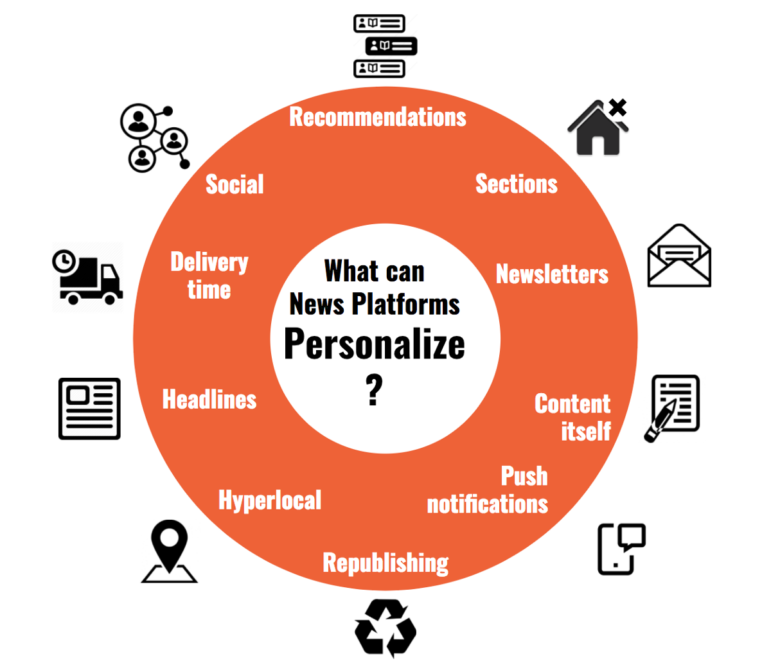
When you open a news app, the stories you see are often tailored specifically to you. AI analyzes your reading habits, search history, location, device usage, and engagement patterns. It then predicts what you’re most likely to read next.
It’s similar to how streaming platforms recommend shows. The more you interact, the smarter the system becomes.
Here’s how AI personalizes news:
- Tracking which topics you engage with most
- Analyzing reading time and scroll behavior
- Recommending related articles
- Sending customized push notifications
On one hand, this enhances user experience. You get relevant stories without digging through unrelated content. It saves time. It feels intuitive.
But there’s a downside—filter bubbles.
When AI continuously feeds you content aligned with your interests and beliefs, you may become isolated from opposing viewpoints. This can reinforce biases and deepen polarization. Instead of seeing diverse perspectives, you’re shown more of what you already agree with.
News organizations face a delicate balancing act: deliver personalized experiences while preserving exposure to diverse ideas.
AI makes news feel tailored and efficient—but editorial responsibility must ensure it doesn’t become an echo chamber.
AI in Fact-Checking and Combating Misinformation

If there’s one area where AI’s role is absolutely critical, it’s fighting misinformation.
The digital age has made it easier than ever to spread false information. A misleading post can go viral within minutes. By the time fact-checkers respond, the damage may already be done.
AI helps level the playing field.
Automated fact-checking tools scan articles, speeches, and social media posts in real time. They compare claims against verified databases and historical records. If inconsistencies appear, the system flags them for review.
For example:
- Detecting manipulated images using computer vision
- Identifying deepfake videos
- Cross-referencing political statements with archived transcripts
- Spotting bot-driven disinformation campaigns
Deepfake detection is especially crucial. AI-generated videos can convincingly mimic real people. AI tools trained to recognize subtle digital fingerprints help expose synthetic media before it spreads widely.
But here’s the irony: the same technology used to create misinformation is also used to fight it.
AI alone can’t decide truth. It can identify discrepancies, but journalists must investigate context and intent. Fact-checking still requires human oversight to avoid false positives or misinterpretations.
In the battle between truth and deception, AI is both weapon and shield. Used responsibly, it strengthens journalism’s ability to protect public trust.
The Role of AI in Multimedia Journalism
Journalism isn’t just about text anymore. It’s visual, interactive, and immersive. AI is transforming multimedia storytelling in fascinating ways.
AI in Video Production
Video editing once required hours of manual cutting and arranging. AI tools now:
- Automatically generate subtitles
- Suggest optimal cuts
- Enhance audio quality
- Create highlight reels from long footage
Newsrooms can produce professional video content faster than ever. AI can even summarize lengthy press conferences into short, digestible clips.
Live broadcasts also benefit. Real-time translation powered by AI allows global audiences to understand speeches instantly.
AI-Generated Visuals and Graphics
Data visualization is another area where AI shines. Complex datasets can be transformed into interactive charts and infographics within minutes.
For example:
| AI Tool Function | Impact on Journalism |
|---|---|
| Automated Chart Creation | Faster data storytelling |
| Image Enhancement | Clearer visual reporting |
| Graphic Design Assistance | Improved audience engagement |
| Real-Time Video Translation | Broader global reach |
AI can also generate illustrative images when real photos aren’t available—though transparency about such usage is essential.
Multimedia journalism powered by AI feels more dynamic, immersive, and accessible. Yet, authenticity must remain a priority. Audiences deserve to know when visuals are AI-generated.
Voice Assistants and AI in Audio Journalism

Podcasting and audio news have exploded in popularity. AI plays a subtle but powerful role here too.
Speech-to-text systems instantly transcribe interviews. This saves journalists hours of manual work. AI editing tools remove filler words, background noise, and awkward pauses automatically.
Voice assistants like smart speakers deliver personalized news briefings generated or curated by AI systems. You can literally ask for the news, and AI selects stories tailored to your preferences.
Some outlets even experiment with AI-generated voices for news summaries. These synthetic voices sound increasingly natural—almost indistinguishable from humans.
But should AI replace human anchors? That’s still debated.
Voice carries emotion, credibility, and personality. While AI can mimic tone, it lacks genuine lived experience. In audio journalism, authenticity matters deeply.
AI enhances production efficiency, but the warmth of a human voice remains irreplaceable.
Ethical Concerns and Bias in AI Journalism

Let’s pause for a second and address the elephant in the newsroom: ethics. Whenever artificial intelligence enters a field built on trust, accountability, and public responsibility, questions naturally follow. And journalism is no exception.
AI systems are only as good as the data they’re trained on. If that data contains bias—racial, political, cultural, or gender-based—the AI can amplify it. In fact, it can scale it faster than any human ever could. Imagine an algorithm trained primarily on Western news sources. Its understanding of global issues may lean heavily toward certain perspectives, unintentionally marginalizing others.
Bias in AI journalism can appear in subtle ways:
- Story recommendations that prioritize sensational content over nuanced reporting
- Headline optimization systems that favor emotionally charged language
- Predictive crime reporting tools that disproportionately focus on certain neighborhoods
- Automated moderation tools that misinterpret cultural language patterns
The danger isn’t just incorrect information—it’s distorted framing. Journalism shapes public opinion. If AI subtly influences what stories get visibility, what angles are emphasized, or whose voices are amplified, it can shift narratives in powerful ways.
Then there’s transparency. Should news organizations disclose when an article is AI-generated? Most experts argue yes. Readers deserve to know how content is produced. Trust is fragile. Once broken, it’s hard to rebuild.
Another ethical issue is accountability. If an AI-generated story contains errors, who is responsible? The developer? The newsroom? The editor who approved it? AI doesn’t take responsibility. Humans do.
Think of AI as a powerful engine. Without ethical steering, it can drive journalism off course. Newsrooms must establish clear guidelines, audit algorithms regularly, and ensure human oversight remains central.
Ethics in AI journalism isn’t optional—it’s foundational. Without it, the credibility of the entire industry is at stake.
Job Displacement vs. Job Transformation

Whenever technology advances, one fear always follows: Will it take our jobs?
In journalism, this question echoes loudly. If AI can write reports, edit videos, transcribe interviews, and analyze data, what happens to human journalists?
The reality is more nuanced than a simple yes or no.
AI is automating repetitive, data-heavy tasks. Earnings reports, sports summaries, weather updates—these are areas where automation thrives. That might sound threatening, but here’s the twist: those tasks were often time-consuming and routine. By offloading them to AI, journalists gain time to focus on deeper, more investigative work.
Instead of eliminating jobs outright, AI is reshaping them.
Journalists today are increasingly expected to:
- Interpret complex data insights
- Collaborate with technologists and data scientists
- Verify AI-generated outputs
- Focus on storytelling that requires empathy and context
- Develop multimedia skills
New roles are emerging too—AI editors, algorithm auditors, data journalists, and audience engagement analysts. Newsrooms are evolving into hybrid environments where technology and creativity intersect.
That said, smaller news organizations with limited resources may feel pressure. Automation can reduce staffing needs for routine reporting. The transition isn’t painless.
But history shows that journalism adapts. Radio didn’t eliminate newspapers. Television didn’t eliminate radio. The internet didn’t eliminate TV. Each innovation transformed roles rather than erasing them entirely.
AI is not a bulldozer flattening journalism. It’s more like a remodeling tool—reshaping the structure. Those who adapt will find new opportunities. Those who resist change may struggle.
In the end, journalism is about human connection. And that’s something machines still can’t replicate.
AI and the Future of Editorial Decision-Making

Behind every published article lies an editorial decision: Is this story newsworthy? Is it accurate? Does it serve the public interest?
AI is beginning to influence those decisions—but should it control them?
Today, many newsrooms use AI-powered analytics dashboards. These systems track audience engagement in real time. Editors can see which headlines are trending, which stories generate clicks, and how long readers stay on a page.
This data is valuable. It provides insight into audience preferences. But it also introduces a risk: prioritizing popularity over importance.
If AI shows that celebrity gossip generates more engagement than investigative reporting, should editors allocate more resources to gossip? That’s where human judgment becomes critical.
Editorial decision-making must balance:
- Public interest
- Audience demand
- Ethical responsibility
- Business sustainability
AI provides data. It doesn’t define values.
There’s also the question of automated content moderation. AI can filter comments, flag inappropriate content, and manage community guidelines at scale. But nuance matters. Sarcasm, satire, and context can confuse algorithms.
The future likely involves collaborative decision-making. AI will offer insights, predictions, and performance metrics. Editors will interpret those insights through the lens of journalistic ethics.
Think of AI as a compass—it can show direction, but it doesn’t decide the destination.
The Human Touch: Why Journalists Still Matter

With all this talk about algorithms and automation, it’s easy to wonder: Are humans becoming secondary in their own profession?
Absolutely not.
Journalism at its core is about storytelling. And storytelling is deeply human.
AI can process data, generate summaries, and detect patterns. But it doesn’t experience grief at a disaster site. It doesn’t feel outrage at injustice. It doesn’t build trust with vulnerable sources over months of careful reporting.
Empathy is not programmable in the way lived experience is.
When a journalist interviews a family affected by economic hardship, the power of that story comes from emotional intelligence—the ability to listen, interpret tone, notice hesitation, and ask the right follow-up question. AI can transcribe the conversation, but it can’t build the relationship.
Human journalists also make ethical judgments in complex situations. Should a victim’s name be published? Should graphic images be shown? These decisions require moral reasoning, not just pattern recognition.
Creativity is another irreplaceable trait. Investigative angles, narrative arcs, compelling metaphors—these are born from imagination and lived understanding.
If AI is the engine, journalists are the drivers. The machine may assist, but the human determines purpose and direction.
In a world increasingly shaped by automation, authentic human storytelling may become journalism’s greatest strength.
Challenges Newsrooms Face When Adopting AI

Adopting AI isn’t as simple as installing software and pressing a button. For many newsrooms, the transition is complex, expensive, and sometimes overwhelming.
First, there’s the financial barrier. Advanced AI tools require investment—infrastructure, training, and ongoing maintenance. Smaller organizations may struggle to compete with larger media corporations that can afford cutting-edge systems.
Second, there’s the skills gap. Journalists traditionally trained in writing and reporting now need familiarity with data analytics, coding basics, and algorithmic systems. That shift requires training and cultural adaptation.
Third, integration can be messy. AI tools must fit seamlessly into editorial workflows. If systems are clunky or unreliable, they create frustration instead of efficiency.
Privacy is another major concern. AI systems often rely on user data for personalization and analytics. News organizations must ensure compliance with data protection regulations and maintain reader trust.
Here’s a quick breakdown of key challenges:
| Challenge | Impact on Newsrooms |
|---|---|
| High Implementation Costs | Limits access for smaller outlets |
| Technical Skill Gaps | Requires retraining staff |
| Ethical Oversight Needs | Demands new governance policies |
| Data Privacy Concerns | Affects audience trust |
| Algorithm Transparency | Complicates accountability |
Despite these hurdles, many newsrooms recognize that AI adoption isn’t optional. It’s becoming essential to remain competitive in a fast-paced digital landscape.
The key lies in strategic implementation—balancing innovation with responsibility.
The Future of AI in Journalism

So, where is all this heading?
The future of AI in journalism isn’t about replacement—it’s about integration. AI will likely become as invisible and essential as the internet itself. We won’t think of it as a separate tool. It will simply be part of how journalism functions.
We can expect:
- More advanced real-time translation enabling global collaboration
- Improved deepfake detection technologies
- AI-assisted investigative reporting across borders
- Hyper-personalized news ecosystems
- Greater automation in routine content production
But alongside innovation must come regulation and ethical frameworks. Transparency about AI usage will likely become standard practice. Readers will demand it.
Perhaps the most exciting possibility is enhanced accessibility. AI can convert text into audio for visually impaired audiences, translate stories into multiple languages instantly, and summarize complex topics for broader understanding.
In many ways, AI could democratize journalism—making information more accessible and inclusive.
The future isn’t man versus machine. It’s man with machine.
Conclusion
Artificial intelligence is not a distant concept reshaping journalism from afar—it’s already embedded in the daily operations of modern newsrooms. From automated reporting and data analysis to fact-checking and personalized content delivery, AI has transformed how news is created and consumed.
Yet, despite its power, AI remains a tool. It accelerates processes, enhances efficiency, and uncovers patterns. But it doesn’t replace empathy, ethics, creativity, or courage. Journalism’s core mission—seeking truth and informing the public—still depends on human judgment.
The real transformation lies not in machines taking over, but in journalists evolving. Those who embrace AI thoughtfully will unlock new storytelling possibilities. Those who prioritize transparency and ethics will preserve public trust.
AI is changing journalism—but humans are still writing its future.
FAQ’s
No. While AI can automate routine reporting and analyze large datasets, it cannot replicate human empathy, ethical judgment, investigative instincts, or creative storytelling.
AI detects misinformation by analyzing patterns, verifying claims against trusted databases, identifying bot networks, and spotting deepfake content.
AI-generated news can be accurate when based on verified data, but it requires human oversight to ensure context, fairness, and editorial standards.
It can. Personalized news feeds may create filter bubbles by showing users content aligned with their preferences, limiting exposure to diverse perspectives.
Modern journalists benefit from data literacy, digital analytics understanding, multimedia skills, and the ability to collaborate with technology teams.